Flakes have an image problem: they all look alike on a dark shirt, so people treat them all the same way, usually with more of whatever shampoo is already failing. In Bessemer City salons, the flake conversation sorts into three very different buckets. Product and oil buildup that a proper cleanse resolves. Dry scalp that washing less and gentler fixes. And true scalp conditions, dandruff and beyond, that salon products can soothe but not cure. Working out which bucket you are in is the whole job.
Symptom one: film, itch, and hair that never feels clean
Buildup flakes tend to be small, white or gray, and accompanied by a coated feeling: hair that looks dull by day two, roots that feel waxy, styling products piling up faster than wash day removes them. Dry shampoo stretches, heavy conditioners, hard water minerals, and quick thirty-second shampoos all feed it. The scalp underneath is usually normal once it is actually clean, and the itch is the itch of residue, not disease.
Symptom two: fine flakes and a tight, dry scalp
Dry scalp flakes are tiny, dry, and loose, often worst in winter when indoor heat dries the air, and the scalp feels tight rather than oily. This pattern gets worse with hot water and strong shampoo, the opposite of buildup, which is why identifying your bucket matters before buying anything. Small flakes plus dry skin on the rest of the body is a supporting clue.
Symptom three: the pattern that points medical
Dandruff proper involves an oily scalp, larger yellowish flakes that clump, and itching that returns quickly after washing. Beyond dandruff sit conditions a salon cannot treat: thick scaly patches, redness spreading past the hairline, sores, crusting, significant hair shedding, or flakes that ignore every reasonable product for a month. Those belong to a dermatologist, promptly rather than eventually.
Work it in order
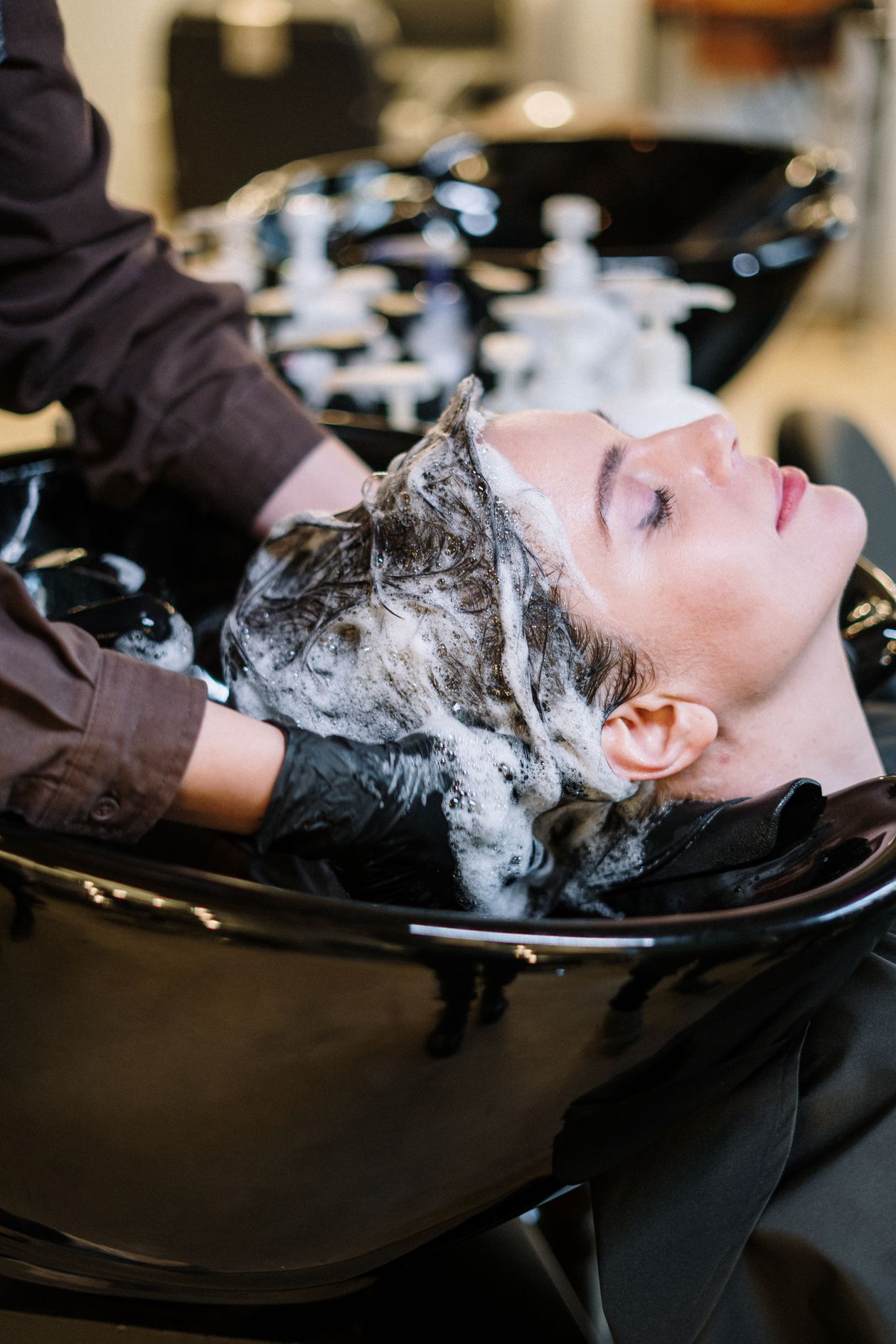
- Do one genuinely thorough cleanse. Use a clarifying shampoo, massage the scalp with fingertips for a full minute, rinse long, and repeat. Many buildup cases end here.
- Audit what goes on the scalp. Conditioner, oils, and heavy styling products belong on lengths, not skin. Dry shampoo gets a day or two of use, not a week.
- Adjust water and frequency. Lukewarm water, and washing on the schedule your oil level actually dictates, calms both buildup and dryness patterns.
- Try a scalp exfoliant if film persists. Gentle chemical or scrub exfoliants lift residue a shampoo misses. Use as directed, not daily.
- If flakes look like dandruff, use an anti-dandruff shampoo properly. These need contact time on the scalp, several minutes, and a few weeks of consistent use before you judge them.
- Escalate on the medical signs. Spreading redness, thick scale, pain, sores, or shedding means a dermatologist, and bring a list of what you already tried.
What a salon can and cannot do
A stylist sees scalps all day and is a useful first opinion: they can spot film, identify dry versus oily patterns, do a proper clarifying or scalp treatment, and tell you honestly when what they see looks beyond salon care. At Hair Shack, that honest referral is part of the job. What a salon cannot do is diagnose or treat medical conditions, and any service claiming to cure them is overpromising. Keep cuts and color off an irritated, broken, or inflamed scalp until it settles; chemistry on angry skin helps nothing.
Children and partners sharing the same bathroom often share the same confusion, so one household note: flakes that appear in several family members at once, especially with itching, deserve a quicker medical look than flakes in one person, because some scalp conditions spread through shared brushes and close contact. Wash brushes and combs as part of any serious scalp reset, and do not share them while a scalp is under treatment.
Finally, give any new routine time to be judged fairly. Scalps respond over weeks, not days, and switching products every three days guarantees you learn nothing except that everything half-worked. Pick the routine that matches your bucket, run it consistently for three to four weeks, and let the trend, less film, less itch, fewer flakes, be the evidence you act on.
Common questions
Are flakes always dandruff?
No. Most flakes are buildup or dry scalp, which need opposite fixes from dandruff. Dandruff flakes are larger, yellowish, and oily, with itching that returns fast after washing.
How often should I use clarifying shampoo?
As needed for buildup, often every few weeks for heavy product users, less for dry scalps. It is a reset tool, not a daily shampoo for most people.
When exactly should I see a dermatologist?
When you see thick scaling, spreading redness, sores, pain, or notable shedding, or when a month of correct home care changes nothing. Do not keep buying stronger products instead.
Photos in this guide are representative stock images.
← All guides from Hair Shack← Back to Hair Shack