Few haircut decisions punch above their weight like bangs. A few inches of fringe changes how a face reads, how long styling takes every morning, and how often you visit the salon. People in Bessemer City usually arrive at bangs one of two ways: a sudden urge with a photo in hand, or years of thinking about it. Either way, as any stylist in town will tell you plainly, the same questions decide whether bangs become a signature or a six-month regret, and most of them are practical rather than mysterious.
Choosing: hair first, face second, lifestyle third
Face shape advice gets the attention, but your hair's behavior matters more. A strong cowlick at the hairline will split a blunt fringe in the same place every day. Very curly hair cut into bangs will spring far shorter than it looks wet. Fine hair can vanish into a wispy fringe or look surprisingly full in a blunt one, depending on how far back the section starts. A good stylist checks all of that before the scissors come out.
Then shape: fuller fringes tend to widen and soften, side-swept fringes lengthen and angle, and curtain bangs, parted in the middle and longer at the sides, are the lowest-commitment entry point because they blend into layers as they grow. Lifestyle is the tiebreaker. Bangs sit on the forehead, so they meet skin oil and sweat first, need washing or refreshing more often than the rest of your hair, and in a Piedmont summer they will know about humidity before you do.
The first two weeks
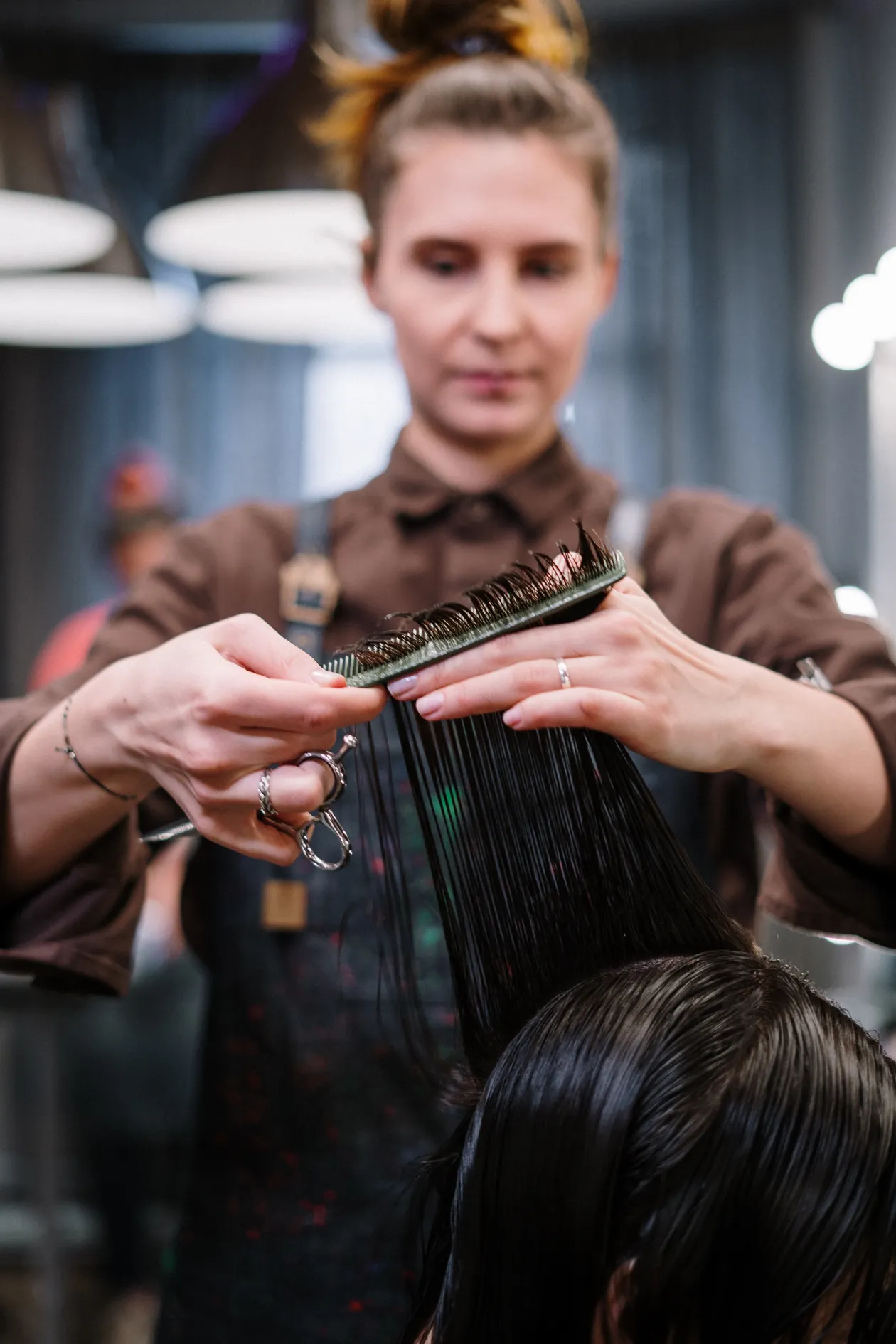
New bangs need training. Hair that has fallen to one side for years resists a new direction, so blow-dry the fringe first, before the rest of your hair, brushing it side to side and then into place while it dries. Styling them last, after they have air-dried into their old habit, is fighting a battle already lost. Most people find the fringe settles into its new pattern within a couple of weeks of consistent drying.
Living with them: the maintenance steps
- Wash the fringe more often than the hair. A quick basin wash or a shampoo of just the fringe takes two minutes and resets a greasy fringe without a full wash day.
- Use dry shampoo before bed, not in a panic. Applied at night, it absorbs oil as you sleep and the fringe wakes up wearable.
- Keep product light and off the forehead line. Heavy products weigh fringe down and transfer to skin, which helps neither hair nor complexion.
- Book fringe trims between cuts. Bangs grow at the same rate as the rest of your hair, roughly half an inch a month, but two weeks of growth changes how they sit. Many salons offer quick fringe trims between full appointments.
- Know your humidity plan. On the worst summer days, a slightly looser fringe style survives better than a precision-straight one fighting the air. Work with the weather, not against it.
- Trim at home only if you must, and then barely. Cut dry hair, in tiny vertical snips, less than you think. Wet bangs cut at the right line dry into a much shorter line.
Growing them out without hating it
Every fringe wearer eventually faces the grow-out, and it has stages. Weeks one to four, the fringe is just long enough to annoy your eyes: sweep it to the side and let it be a side fringe. Months two to three, it reaches the awkward cheekbone length where clips, braids along the hairline, and curtain styling earn their keep. Past that, it becomes face-framing layers, and a stylist at Hair Shack can blend the growing fringe into the rest of the cut at a normal trim so the stages look intentional.
The grow-out fails when people intervene daily with heat and heavy product, or cut a frustration trim that restarts the clock. Decide you are growing, tell your stylist, and let each appointment reshape rather than shorten. Within a couple of seasons the fringe is a memory and a good story.

Common questions
Will bangs work with curly hair?
Yes, cut dry or with curl shrinkage fully accounted for, and usually longer and softer than straight-hair fringe. The consultation should happen with your hair in its natural state.
How often do bangs need trimming?
Most fringes want attention every few weeks, far more often than a full cut. Ask about quick fringe trims between appointments when you book the cut.
Can I cut my own bangs at home?
You can, and many regret the wet-hair, straight-across, too-much-at-once version. If you do it, cut dry, upright, in tiny amounts. Better: let the salon do the first one.
Photos in this guide are representative stock images.
← All guides from Hair Shack← Back to Hair Shack